
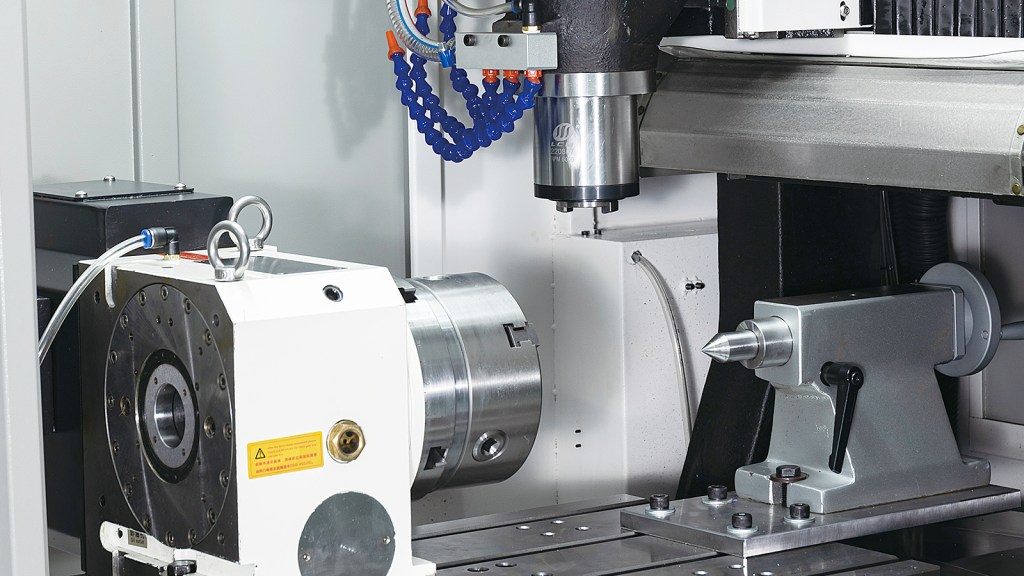
Selecting a milling machine against measured production data – part families, tolerance envelopes, target takt time – is one of the highest-leverage decisions a manufacturing plant makes. The right CNC milling machine sets the ceiling for precision, chip-to-chip time, and cost per part, and every downstream budget inherits it. A disciplined process built around five engineering questions matches machine capabilities to production data and cuts through the machine market’s breadth.
How to Match Machine Type and Work Envelope to Your Part Portfolio?
Machine type follows part geometry, never the reverse – each type of CNC machine earns its keep against a different order book. Comparing the different types of CNC machines against real production data is how a plant starts to choose the right CNC machine.
Vertical CNC, Horizontal CNC, or 5-Axis CNC?
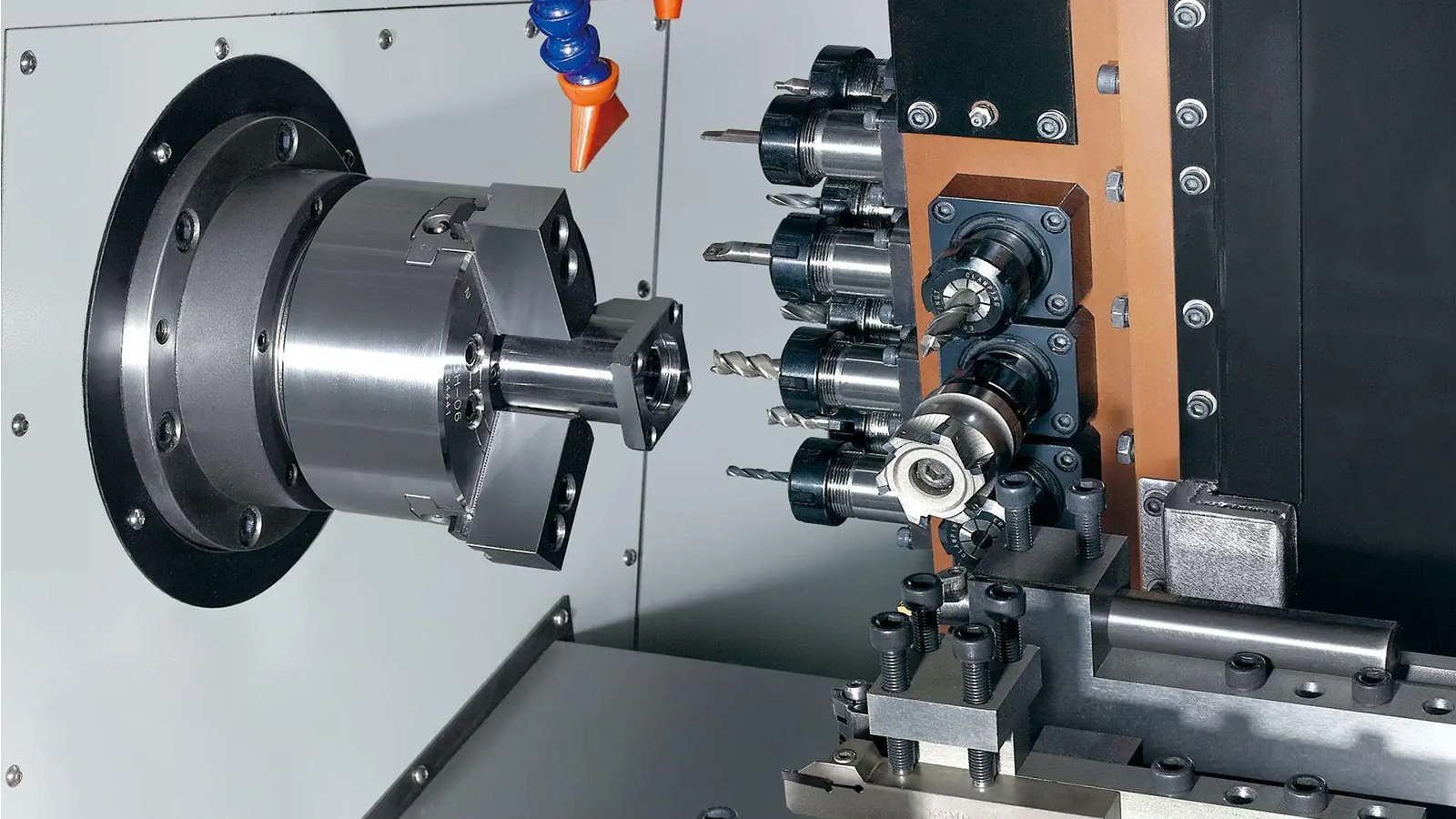
A job shop supplying general CNC machining services – brackets, housings, manifolds at moderate production volume – rarely needs more than a 3-axis CNC vertical machining center. Spindle orientation gives the operator a clear view of the cutting tool, programming stays simple, and the footprint fits tight floor space. High-volume prismatic parts requiring four-side access point toward a horizontal CNC: gravity-assisted chip evacuation keeps the cutting zone clean through aggressive face milling and heavy horizontal milling, extending insert life on tough alloys. Contoured impellers, structural fittings, and medical components with undercut features justify a 5-axis CNC machine, which finishes complex geometries in one setup and eliminates re-fixturing error at every machine change.
How Much Work Envelope Does the Production Plan Actually Need?
Every additional meter of travel costs rigidity, floor space, and money, so plot the largest workpiece plus fixture on a 24-month horizon and match the machine to that envelope with a 15-20% margin. A larger work envelope buys room to grow; an oversized one buys a heavier, costlier machine idling below its capability. Two boundaries deserve equal attention: door and crane clearance, and the line between machine classes – a CNC router, CNC plasma cutters, or CNC laser cutting equipment serves sheet goods and light stock, while CNC drilling and CNC grinding fill niches a general-purpose milling machine handles only inefficiently.
When the order book mixes rotational and prismatic features – shafts with milled flats, cross-drilled holes, keyways – the calculus shifts. A KX-52JY Turn-Mill CNC Center with Power Turret consolidates CNC turning and driven-tool milling in one setup and removes the second-op transfer that quietly consumes takt time in plants running separate lathe and mill cells.

Why Does Structural Rigidity Outweigh Peak Spindle Power?
Catalogs sell spindle power; production floors live with rigidity. A 15 kW spindle on a thin-walled frame chatters at half the depth of cut that an 11 kW spindle sustains on a properly engineered casting. In any cutting machine, rigidity starts in the bed: high-grade HT300 Meehanite cast iron, stress-relieved by natural aging or vibration treatment so residual stress does not distort the ways. Guideway choice then sets damping behavior. Box ways carry higher loads and damp regenerative chatter better in heavy roughing, but their friction surfaces can introduce the stick-slip effect that degrades contour accuracy in fine finishing; roller linear guides trade some damping for lower friction and faster rapids. Neither is universally superior – the choice depends on whether the machining process rewards metal-removal rate or surface finish. Hand-scraped ways, verified against a master surface, preserve spindle-to-table geometry that no software restores once lost. Under load, every machine tool is a spring-mass system: insufficient stiffness surfaces as tool deflection, tapered walls, and the squeal of chatter that scrapes inserts.
Which Control System Capabilities Protect Precision During Long Runs?
The control system decides how much of the machine’s mechanical capability survives an eight-hour unattended run. Four capabilities separate advanced CNC controls from entry-level units: look-ahead planning that feeds slower through tight corners instead of rounding them; per-axis backlash and pitch-error compensation; closed-loop feedback from linear scales rather than rotary-encoder inference; and thermal displacement compensation that shifts offsets as spindle and ballscrews reach thermal steady state. On a 5-axis machine, rotary-axis calibration and tool-center-point management keep the tool vector correct through tilting moves; without them, a nominally accurate machine cuts tapered contours under simultaneous rotary motion. None of these features fit on a spec sheet, yet each quietly widens the tolerance band exactly when the shop is hot, the queue is long, and nobody is standing at the machine.
How Should a Machine Selection Guide Read Positioning Accuracy Data?
Accuracy claims are comparable only when the test method behind them is known – the detail most machine guide articles omit. Three disciplines keep the evaluation honest:
Demand the raw test data. Ask each machine manufacturer for the laser-interferometer results behind the positioning accuracy and repeatability figures, and confirm they reflect bidirectional runs on all linear axes per ISO 10791-4 – not a single-direction best case.
Weight repeatability over accuracy. Systematic positioning error can be compensated; scatter cannot. Unattended production lives or dies on repeatability.
Buy test cuts, not adjectives. A finished test-piece report per ISO 10791-7 shows what the machine holds under simultaneous multi-axis motion, feed reversals, and thermal load – conditions a showroom demo never reproduces.
Buyers drafting a formal acceptance protocol can anchor geometric, positioning, and cutting tests to ASME B5.54, the standing North American framework for machining center performance evaluation. Machine models that arrive with this documentation at quotation stage usually come from organizations that will still answer the phone at warranty stage.
What Belongs on the Final Machine Selection Checklist?
To select the right machine, six items consistently separate smooth installations from expensive surprises:
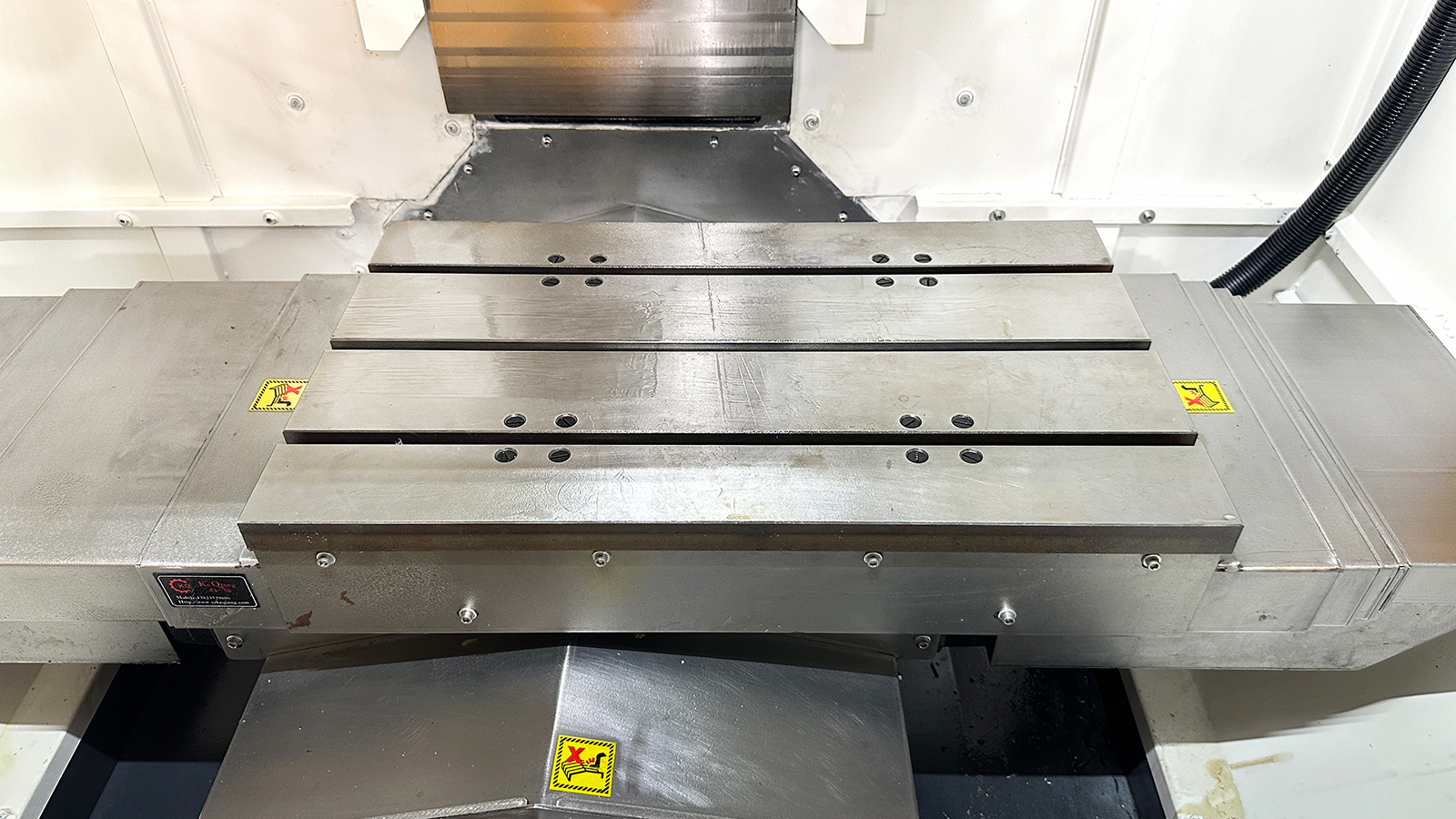
- Foundation and access. Confirm the slab carries the machine’s mass, and measure door openings, column clearance, and crane routes – machine size and facility geometry must reconcile on paper.
- Utilities. Modern CNC equipment demands tight voltage tolerance, clean compressed air, and adequate cooling; undersized supply starves rapid traverse and accelerates drive faults.
- Chip and coolant management. Cutting sticky alloys needs through-spindle coolant, a conveyor sized for real removal rates, and tank capacity that survives a night shift.
- Tooling interface. Tool-changer pockets sized for the full part family, on a standard CNC taper such as BT40, keep cutting tools interchangeable across the shop floor.
- Service depth. Spare-parts stock, remote diagnostics, and documented commissioning reports.
- Customization headroom. Fourth-axis interfaces, high-pressure coolant, bar feeders, and automation-ready M-code packages let the chosen machine grow with production.
On the builder side, transparency at quotation predicts behavior at warranty. A machine manufacturer that publishes complete specifications, machine options, and test protocols – as YASHU does across its CNC lathe and turn-mill range – shortens benchmarking and removes configuring guesswork. A CNC milling machine that clears every line of this checklist will still be earning its floor space a decade from now; one chosen on catalog superlatives starts depreciating the day the first tolerance drifts.
FAQs
Is a 5-axis CNC machine always the better purchase?
No. Choose a CNC with simultaneous five-axis capability only when part geometry genuinely demands multi-axis machine motion; otherwise it is the most expensive machine on the floor. The best CNC machine matches the order book, not the axis count – bracket and plate work runs cheaper on a well-tooled 3-axis CNC mill, with simpler programming and faster setups.
How much can thermal growth actually move a spindle?
Tens of micrometers. As cutting heat soaks into the spindle and column, a machine holding ±0.005 mm cold can drift past that by mid-shift – which is why thermal displacement compensation and a warm-up routine matter more than the brochure’s cold-machine figure.
When does a turn-mill center beat separate lathe and mill cells?
For part families combining turned diameters with milled flats, cross holes, or keyways, a turn-mill center usually wins on cost per part. Every transfer between machines adds handling, queue time, and re-fixturing error; a KX-52JY Turn-Mill CNC Center with Power Turret performs CNC turning and driven-tool milling on one platform, holding concentricity between turned and milled features that two separate setups struggle to match.
What accuracy class should a shop specify for mold work versus general machining?
General prismatic work is well served by repeatability in the ±0.008-0.012 mm range; mold and die work with finishing cuts in hardened steel rewards ±0.005 mm or better plus documented geometric tests. Specify the class the part tolerance actually requires – paying for accuracy the workpiece never uses inflates machine costs without return.
How should a plant evaluate a machine manufacturer before placing an order?
Judge the builder the way the machine will be judged: request laser-interferometer and test-cut documentation, spare-parts commitments, and references from plants cutting similar materials. Builders such as YASHU that publish full specifications and configuration options make this due diligence straightforward – a manufacturer willing to run a test cut speaks louder than any sales deck.
References
- International Organization for Standardization. (1998). Test conditions for machining centres – Part 4: Linear and rotary axes – Positioning accuracy and repeatability (ISO 10791-4:1998). https://www.iso.org/standard/18859.html – defines the linear- and rotary-axis positioning and repeatability test procedures recommended for verifying manufacturer accuracy claims during machine selection.
- International Organization for Standardization. (2020). Test conditions for machining centres – Part 7: Accuracy of finished test pieces (ISO 10791-7:2020, 3rd ed.). https://www.iso.org/standard/73814.html – specifies the finished test-piece cutting tests that support the article’s argument for demanding cut evidence rather than catalog claims.
- The American Society of Mechanical Engineers. (2005, reaffirmed 2020). Methods for Performance Evaluation of Computer Numerically Controlled Machining Centers (ASME B5.54-2005 (R2020)). https://www.asme.org/products/codes-standards/b554-2005-methods-performance-evaluation-computer – provides the acceptance-test framework recommended for buyers drafting a machining center procurement protocol.