
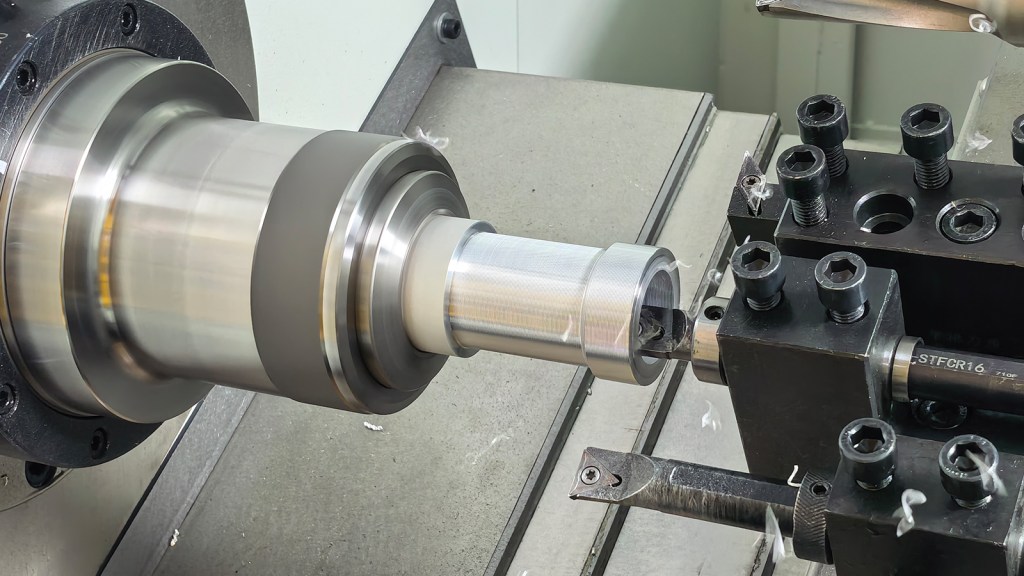
High-mix, low-volume (HMLV) production has become the default demand pattern across aerospace, medical device, and specialized machinery supply chains. Order books read less like a mass production schedule and more like a rotating queue of short-run commitments: 40 impellers this week, a dozen valve bodies next, a repair order of six sleeves after that. The CNC lathe sits at the center of this workflow because turning covers a large share of cylindrical component work, and a modern CNC machine re-points at a new part faster than any other metal-cutting platform. This guide examines what actually makes a turning cell profitable when no two weeks look the same.
Why Does Small Batch Production Change the Economics of Machine Selection?
In volume production, machine investment amortizes across hundreds of thousands of identical cycles. In small batch work, the cost driver shifts to setup labor and changeover time per order. A job of 60 shafts at a 3-minute cycle time can still lose money if every changeover consumes two hours of a setter’s day, because that overhead spreads over too few parts. This arithmetic defines low volume cnc machining: capacity planning stops being a peak-spindle-speed calculation and becomes a per-order overhead calculation. As order volume per SKU falls, a CNC lathe for small batch production earns its place through scheduling density, tooling universality, and control-side convenience rather than through repeated identical cycles.

What Does a Low-Volume CNC Machining Production Run Actually Demand?
A low-volume production run typically spans a single prototype to a few hundred units, and that range changes the quality regime. Long runs stabilize statistically; short runs never do. First-piece inspection, in-cycle gauging, and disciplined setup documentation carry the weight that run-to-run averaging would otherwise provide, in small quantities where every part is effectively the certificate. Drawings arrive denser, too. Mixed-part portfolios bring form, orientation, location, and run-out callouts that follow the symbol conventions defined in ISO 1101:2017, so the machining process must hold geometric tolerances – not only diameters – across parts that may never repeat. In practice, tight tolerances under these conditions are a process-control question: rigid chucking, predictable thermal behavior, and verification habits matter more than any single line in a specification table.
Which Lathe Features Cut Changeover Time in High-Mix Low-Volume Manufacturing?
Standardized Tooling and Tool Data
Every minute spent re-deriving tool offsets is a minute billed to nobody. Shops running small batch cnc production converge on presettable toolholders, a fixed reference layout in the turret, and structured tool data. The ISO 13399-1:2006 information model supports exactly this discipline: cutting tool data such as insert geometry, holder dimensions, and correction values is represented and exchanged in a machine-readable format, so the tool called up in the CAM system matches the physical tool in the turret without trial-and-error discovery. Paired with modular fixtures and a documented datum strategy, this turns each changeover into a verification exercise rather than a rebuild of the entire machining process.
Automation Sized to the Batch
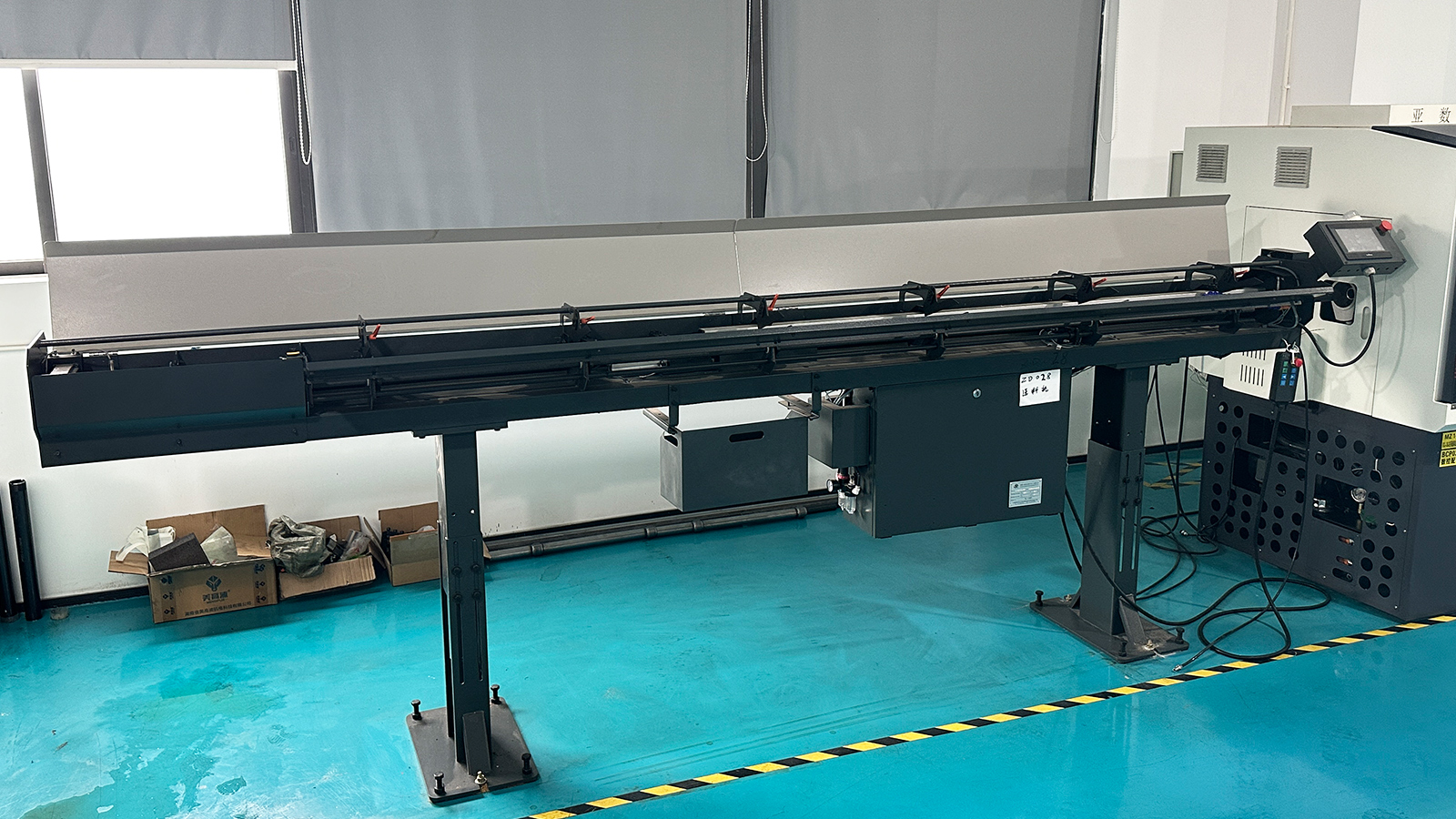
Bar feeders, robotic load/unload, and pallet changers are no longer reserved for volume production. A bar-fed lathe running mixed part families can move from one order to the next with the spindle barely pausing, and a compact robot cell removes one full manual load position at surprisingly modest batch sizes. Robot integration does, however, raise the safety bar: ISO 10218-2:2025 specifies the safety requirements for integrating an industrial robot system into a larger cell – safeguarded space design, safeguarding devices, and the functional behavior of the integrated system – so a lathe intended for future robotic loading should be evaluated against those requirements at purchase time, not retrofitted afterward.
Geometry and Thermal Behavior Under Frequent Restarts
Frequent restarts mean the headstock and spindle bearings cycle between cold and warm states repeatedly, and a short production run rarely reaches thermal equilibrium. Machines with heavy, well-ribbed structures and stable bearing preloads drift less between those states, which protects concentricity on the second and third part of a five-piece order. This quiet structural stability is what allows precision machining claims to survive contact with HMLV reality.
How Does Production Planning Keep High-Mix Low-Volume Output Efficient?
Sequencing orders by part family – similar diameters, similar materials, similar fixturing – reduces the number of full changeovers the schedule actually contains. Layered on top, lean manufacturing methods such as SMED attack the changeover itself: externalize preparation, standardize clamping heights, pre-stage tooling. Measurement then closes the loop. Changeover-heavy environments distort conventional efficiency metrics unless definitions are fixed, and ISO 22400-2:2014 supplies the standardized KPI formulas for manufacturing operations management – availability, effectiveness, and quality ratio built from precisely defined time states – so changeover losses surface in the data where they belong. Production planning and production scheduling built on that measurement discipline reveal which products genuinely belong in low volume manufacturing processes and which should be quoted differently, and that distinction is what keeps efficient production achievable across the whole production line.
What Should Procurement Verify Before Ordering?
Buyers evaluating a CNC lathe for small batch production should check the unglamorous items first: turret station count versus part-family tooling needs, live tooling and C-axis coverage for mill-turn features, tailstock and steady-rest options for slender work, chuck-change speed, bar feeder compatibility with the intended diameter range, and control-side program management for a portfolio of hundreds of active part programs. Safety integration hooks for a future robot cell deserve the same scrutiny. The CNC Lathe Machines range documented by YASHU covers these configurations in published detail, including tailstock, live tooling, and bar-feed options across each model. YASHU also supports non-standard configurations against specific part drawings, which shortens the path from inquiry to a machine matched to the actual order profile rather than to a catalog average.
FAQs
1. What batch size justifies automating a low-volume CNC machining cell?
Automation stops being speculative once manual load/unload becomes the bottleneck: typically when identical-part batches exceed roughly 200-300 pieces, or when bar-fed part families can run unattended between changeovers. Below that threshold, quick-change fixtures and standardized tooling deliver most of the gain at a fraction of the investment.
2. How are tight tolerances held when every order is a different part?
By controlling the variables that survive job changes: rigid chucking, a thermally stable headstock, verified tool setting, and first-piece inspection against the geometric callouts on each drawing. Consistency comes from the process framework, not from familiarity with one particular part.
3. Is a bar feeder necessary for HMLV manufacturing?
Not strictly, but it changes the economics of bar work. If a meaningful share of the portfolio is shaft, pin, and bushing work, a bar feeder lets those orders run with near-zero operator attention, freeing the setter for the next changeover. Chuck-heavy part portfolios may gain more from robot loading instead.
4. Which options matter most when configuring a small batch cnc turning cell?
Turret station count, live tooling with C-axis, a fast hydraulic chuck, tailstock coverage for slender parts, and chip management suited to mixed materials. Program-storage capacity and shop-floor scheduling integration matter more than most buyers expect once the active part-program count grows past a few hundred. How these options are bundled per model is documented across the CNC Lathe Machines range.
5. How long should a changeover take on a modern turning center?
No universal figure exists, but shops running presettable tooling and modular fixtures commonly report changeovers in the 15-30 minute range for familiar part families, while undocumented setups on older machines can consume two hours or more. Track the trend in changeover time, not the absolute number from any single job.
References
- International Organization for Standardization. (2017). Geometrical product specifications (GPS) – Geometrical tolerancing – Tolerances of form, orientation, location and run-out (ISO 1101:2017, 4th ed., confirmed current 2022). https://www.iso.org/standard/66777.html – Defines the symbol language for form, orientation, location, and run-out callouts, supporting the body’s statement that mixed-part HMLV drawings must be interpreted and held geometrically, not just dimensionally.
- International Organization for Standardization. (2006). Cutting tool data representation and exchange – Part 1: Overview, fundamental principles and general information model (ISO 13399-1:2006, confirmed current 2021). https://www.iso.org/standard/36757.html – Defines the machine-readable information model for cutting tool data, supporting the standardized tooling and offset-transfer discipline described in the changeover section.
- International Organization for Standardization. (2025). Robotics – Safety requirements – Part 2: Industrial robot applications and robot cells (ISO 10218-2:2025, 2nd ed.). https://www.iso.org/standard/73934.html – Defines the safety requirements for integrating industrial robot systems into cells, supporting the robotic loading evaluation guidance in the automation section.
- International Organization for Standardization. (2014). Automation systems and integration – Key performance indicators (KPIs) for manufacturing operations management – Part 2: Definitions and descriptions (ISO 22400-2:2014, incl. Amd 1:2017; current, revision under way). https://www.iso.org/standard/54497.html – Defines standardized KPI formulas and time states for manufacturing operations, supporting the OEE measurement discipline discussed in the production planning section.