

Reshoring has moved from boardroom talking point to shop-floor reality, and the enabling hardware is already proven: the modern CNC lathe machine. As 2026 budgets favor shorter supply chains, buyers across automotive, aerospace and general machinery are finding that a well-specified turning cell – stable spindle, rigid bed, automated loading – delivers repeatable machining process results closer to the customer, with fewer freight variables and full control over tolerance and surface finish. CNC lathe machine manufacturing has shifted from a cost compromise to the technical foundation of flexible local manufacturing, supported by a mature machine tool supplier network that can configure equipment to batch size, material and part family.
What Reshoring Actually Demands From a CNC Lathe Machine?
Domestic production rarely means one part, ten thousand pieces, forever. It means mixed families of shafts, bushings, fittings and housings in lots that shift month to month, and the machine behind that work must tolerate the change.
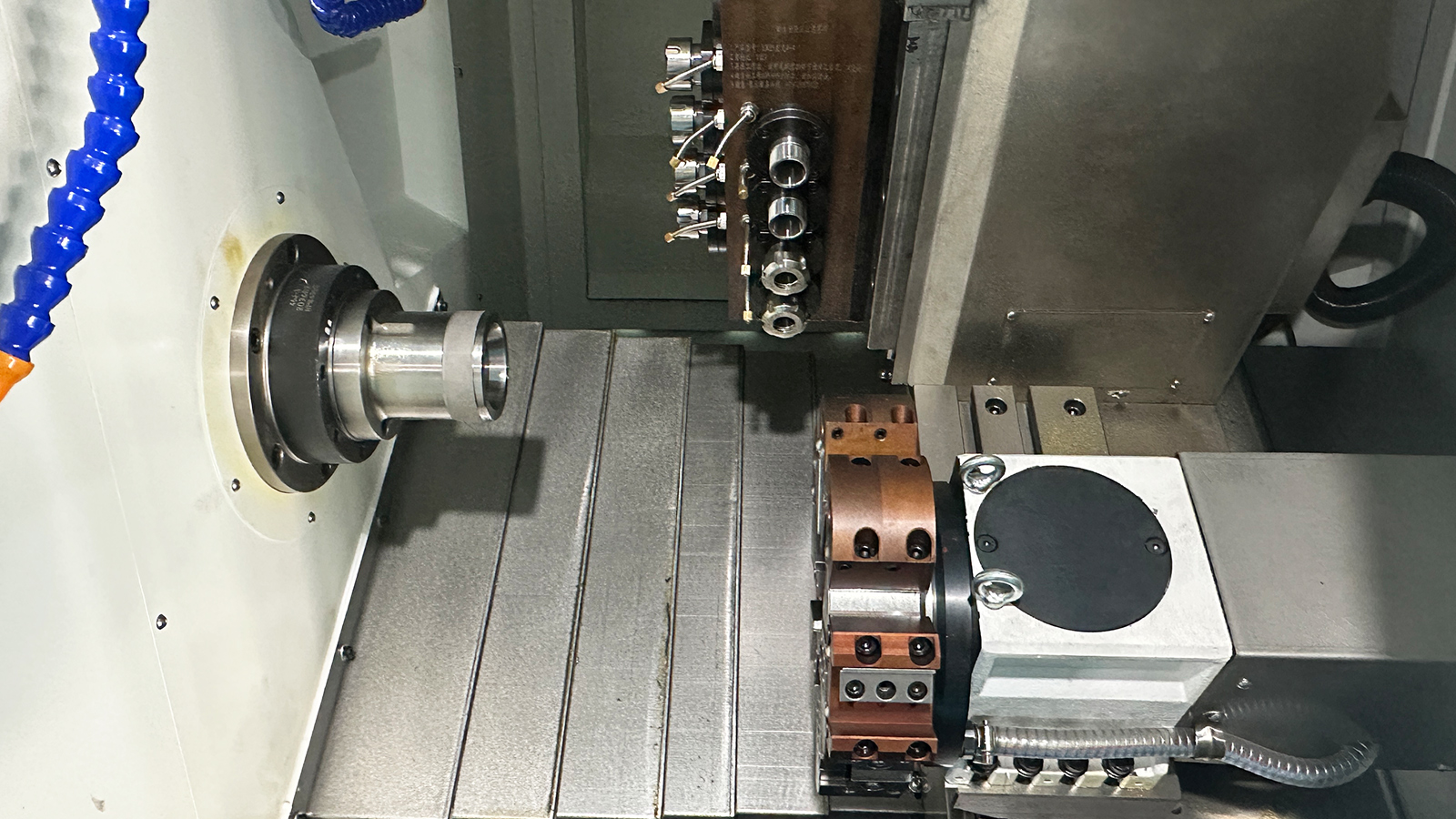
That starts with the mechanical chain. A cast, stress-relieved bed resists dynamic cutting loads; a spindle held to tight radial runout keeps concentricity predictable across thousands of cycles; servo axes with backlash compensation hold the Z-axis length repeatability a boat-tail fitting or hydraulic fitting demands. On turned diameters, high-precision CNC lathe work routinely holds IT7-class dimensional bands under ISO 286-1, and contour circles – the shoulders and radii where seal seats live – are validated against the circular contouring tests defined in ISO 230-4:2022. Shops that verify these capabilities at acceptance, rather than trusting brochure numbers, avoid the classic reshoring trap: quoting shop-floor precision that the hardware cannot repeat under production thermal load.
How CNC Turning Delivers the Precision, Surface Finish and Traceability Domestic Supply Chains Require?
Traceability is where domestic outsourcing wins or loses engineering sign-off. A qualified CNC Lathe Machines program pairs every measurement with machine, spindle, tool offset and operator data, so a nonconformance traces to a specific shift and correction instead of an anonymous overseas batch. Sector auditors in automotive and medical supply chains increasingly expect exactly this, and ISO 9001:2026 reinforces it by requiring organizations to evaluate supplier quality performance as part of production and service control.
The machine-level drivers behind that documentation are concrete. Consistent Ra and Rz surface finish – parameters now defined under ISO 21920-2 – depends on rigid toolholding, appropriate nose radius selection and stable spindle speed; scrap a batch for chatter and the whole cost case collapses. Computer numerical control makes each parameter a recorded, repeatable variable rather than an operator habit, which is why a modern machining process can hand a customer both the parts and the evidence that the parts were measured, not merely hoped for.
Where Flexible Local Manufacturing Finds Its Speed: Automation-Ready Turning Cells?
Flexibility is a hardware decision made at purchase, not an aspiration bolted on afterward. Three configurations separate an automation-ready CNC lathe from a manually tended one:
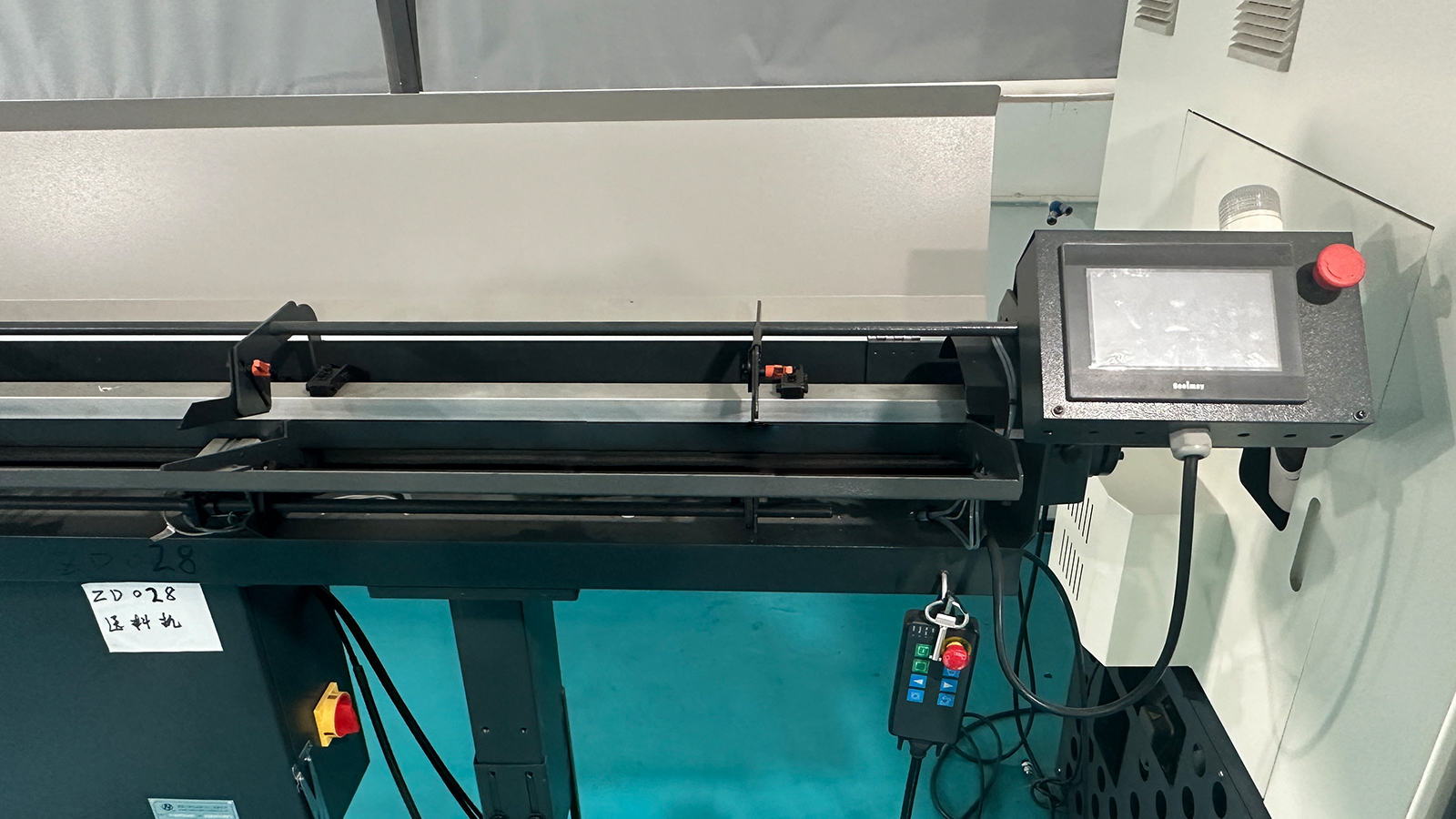
- Bar feeders and part catchers that let a small CNC lathe run lights-out for hours, compressing labor cost per part on high-runner families.
- Quick-change tool posts and presetted tooling that cut family-to-family changeover from a shift to minutes.
- Robot loading interfaces and sub-spindles that merge first- and second-operation work into one unattended cycle.
YASHU builds its turning centers around exactly these paths – rigid bed castings, automation interfaces and spindle options sized for both prototype and production duty – so a domestic shop can start with manual tending and add bar feeding or robot loading as order volumes justify. That staged path is what turns flexible manufacturing from a slide into a weekly scheduling practice.
Can Local Shops Really Match Offshore Pricing? The Real Cost Math of Reshored Turned Parts?
Line-item price comparisons mislead, because the landed cost of an offshore shaft includes ocean freight, tariff exposure, minimum-order inventory and weeks of pipeline stock. When quality escapes, the rework loop – quarantine, air freight the replacement, requalify – erases months of apparent savings. A competitive CNC lathe machine manufacturing program counters with its own numbers: scrap held under a percent, energy costs contained, multi-tasking milling and turning cycles that eliminate a second fixture and setup, and lead times measured in days rather than port calendars.
YASHU builds this total cost of ownership argument around its lathe lineup – supporting fixture design, cycle-time trials and service coverage so buyers can validate the math on real parts before committing capital. On total landed cost per good part, local shops competing with domestic machine productivity frequently win, especially for parts with short product lifecycles or frequent engineering revisions.
Which CNC Lathe Features Matter Most for Reshoring Projects in 2026?
A reshoring-grade selection checklist reads differently from a general shopping list:
- Thermal stability – bed and headstock design that limits drift during long runs, because tolerance without stability is a first-article-only promise.
- Rigidity with the right guideway choice – box linear guideways trade speed for damping where interrupted cuts and difficult alloys dominate.
- Multi-axis capability – C-axis, driven tools and a sub-spindle that mill, drill and turn in one setup, sized to the real part spectrum.
- Coolant and chip strategy – high-pressure through-spindle options for deep holes and difficult alloys rather than uniform specification.
- Open automation interfaces – bar feed, gantry or robot interoperability and controller data access for MES-connected tracing.
Buyers comparing these criteria side by side across CNC Lathe Machines find that reshoring decisions become purchase-order decisions, not speculation – and a request for quotation built on this checklist gives the machine tool supplier everything needed to quote a configured cell rather than a bare machine.
FAQs
Q1: What batch size makes reshoring turned parts viable for a domestic CNC lathe?
Below roughly 500 pieces per revision, freight and minimum-order halves of the offshore quote dominate. Above that, the decision hinges on changeover time: automation-ready lathes with presetted tooling hold per-part cost flat enough that mid-size domestic lots stay price-competitive on total landed cost.
Q2: How does a CNC lathe hold diameter within a few microns over a full production run?
Through the same chain acceptance testing validates: geometric alignment of bed and tailstock, gantry-free spindle runout control, systematic backlash compensation on each axis and, where necessary, thermal compensation applied programmatically when headstock temperature rises over the shift.
Q3: Can one CNC turning center perform milling and turning without moving the workpiece?
Yes, on configurations with live tooling and a C-axis: cross-drilling, polygon milling and slotting execute in the same clamping as turning. This milling and turning integration removes transport- and setup-induced concentricity loss between operations, and matches the multi-axis patterns defined in ISO 13041-series turning center work.
Q4: What traceability documentation should a domestic lathe supplier provide with each batch?
At minimum: material mill certificates tied to heat numbers, inspection results against drawing dimensions, first-article measurement reports on new revisions and – under ISO 9001:2026 practice – records linking parts to process parameters and corrective actions taken on any nonconformance.
Q5: How long does it take to requalify an offshore part on a domestic machining line?
Plan on 2-6 weeks depending on drawing maturity: sample production on a configured lathe cell, first-article inspection against the original specification, then a pilot batch with capability study before the customer releases full production volume.