

A well-matched CNC machining center for metal is the highest-leverage capital decision a machine shop makes – it fixes achievable tolerances, cycle times, and scrap rates for a decade. Computer numerical control changed who moves the slides, not which structure survives the cut. Selection rewards engineers who interrogate the machine itself: how the bed was cast and aged, how the ways were finished, how the spindle behaves under load and heat. Those details, not the controller badge, separate a precision workhorse from an expensive appliance.
What Separates a Metal-Cutting CNC Machine from General-Purpose Equipment?
Damping, thermal stability, and spindle quality. A machine tool built for serious metal removal starts with a cast, stress-relieved bed – castings aged so residual stresses do not twist the geometry after six months of production. Slideways are hand-scraped rather than merely ground, because scraping creates oil pockets and a contact pattern of twenty-plus points per square inch, which damps vibration and preserves alignment under interrupted cuts.
Box ways versus linear guides is the first real fork in choosing the right CNC machine. Box ways win on damping and load capacity for heavy, interrupted cuts in steel; linear guides win on rapid traverse, stick-slip-free fine feeds, and positioning precision in high-speed aluminum work. A shop that hogs Inconel 718 half the week and finishes 6061 brackets the rest will regret a machine tool chosen for only one duty cycle.
The spindle deserves equal scrutiny: dynamic balancing to G2.5 or better, nose runout in single-digit microns, bearing preload matched to duty, an encoder for rigid tapping, and – for deep holes – coolant through spindle. Spindle thermal growth is the quiet tolerance killer. Machines that measure and compensate spindle expansion keep boring bars on size across a four-hour unattended run instead of drifting out mid-batch. (Verify figures against the actual machine’s inspection report.)
Which Types of CNC Machines Fit Which Metal Cutting Operations?
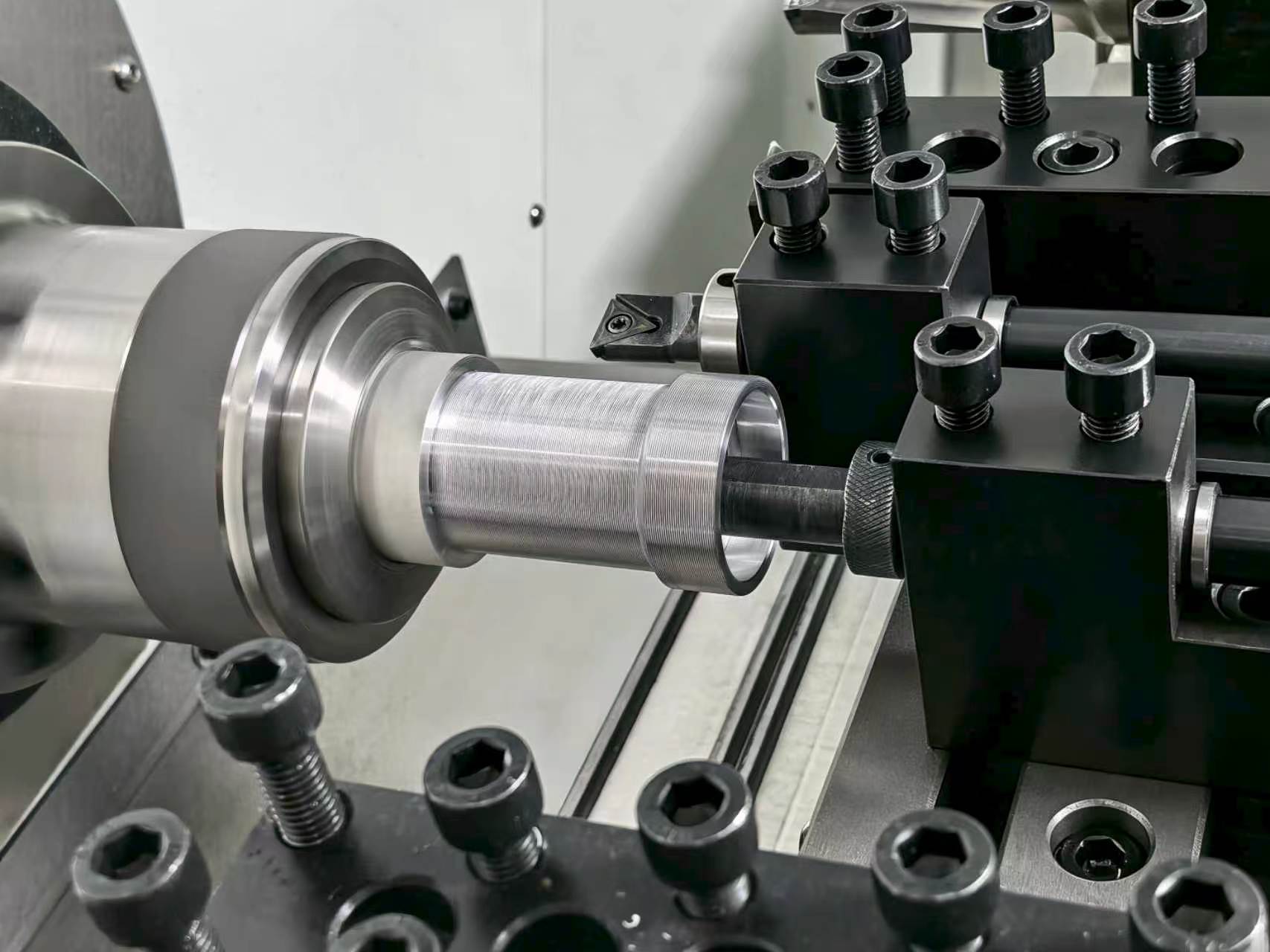
The different types of CNC divide cleanly along part geometry. Prismatic parts – brackets, housings, plates – belong on a CNC mill. Round parts – shafts, bushings, fittings – belong on a CNC lathe, where the workpiece rotates against a stationary turning tool. Parts that are mostly round but carry milled features belong on mill-turning CNC centers, which merge turning and live-tool milling in one setup.
A 3-axis CNC milling machine in vertical machining configuration handles most prismatic work; horizontal machining pays off for four-sided parts and tombstone production. A 5-axis CNC mill adds contouring freedom and eliminates re-fixturing, though frankly, shops whose parts need only indexed 3+2 positioning are paying for simultaneous five-axis capability they will never use.
A CNC router is not a metal machine: sheet metal fabrication and thin aluminum plate are its ceiling. CNC grinding and EDM machines remain complements for hardened die work, though hard turning keeps eroding that boundary – more below. Choosing the right CNC machine is therefore less about “what is the best CNC machine” than about what a specific part family, across its range of materials, demands.
How Do Rigidity and Spindle Behavior Govern Tight Tolerances?
Chatter is the enemy that decides the purchase.
When depth of cut climbs and the structure stores vibration energy instead of damping it, surface finish, tool life, and Cpk collapse together. Rigidity is structural, not electronic: a heavily ribbed bed, a short spindle overhang, a turret that clamps positively. Backlash compensation can clean up positioning numbers, but it cannot restore stiffness lost to a light column – no parameter fixes a structure that flexes.
On the turning side, hard turning now replaces CNC grinding for many round parts: single-point machining of 55-62 HRC steel with CBN tooling, holding Ra finishes near 0.4 µm when the machine cooperates. The prerequisite is honest – a rigid CNC lathe with a scraped bed and a balanced spindle, or the process simply does not transfer. Thermal behavior decides the rest. A machine that drifts ten microns across a shift makes every tolerance on the print negotiable; stable castings and compensated axes make tight tolerances boring.
What Should a CNC Machining Design Guide Settle Before the Machine Is Bought?
Design for CNC machining discipline belongs upstream of the purchase – part geometry dictates machine requirements, as any guide to CNC machining worth reading argues. Machining is subtractive manufacturing – every gram of metal removed is paid for twice, in cycle time and in carbide. Internal corners need radii no smaller than the cutter that reaches them, deep pockets need reach or a fifth axis, and tolerances tighter than ±0.01 mm multiply machining costs non-linearly. The limitations of CNC machining are stable and known – truly sharp internal corners are impossible, thin walls chatter, hard alloys cut slowly – so a CAD design review against the intended machine’s tooling catalog beats any equipment upgrade.
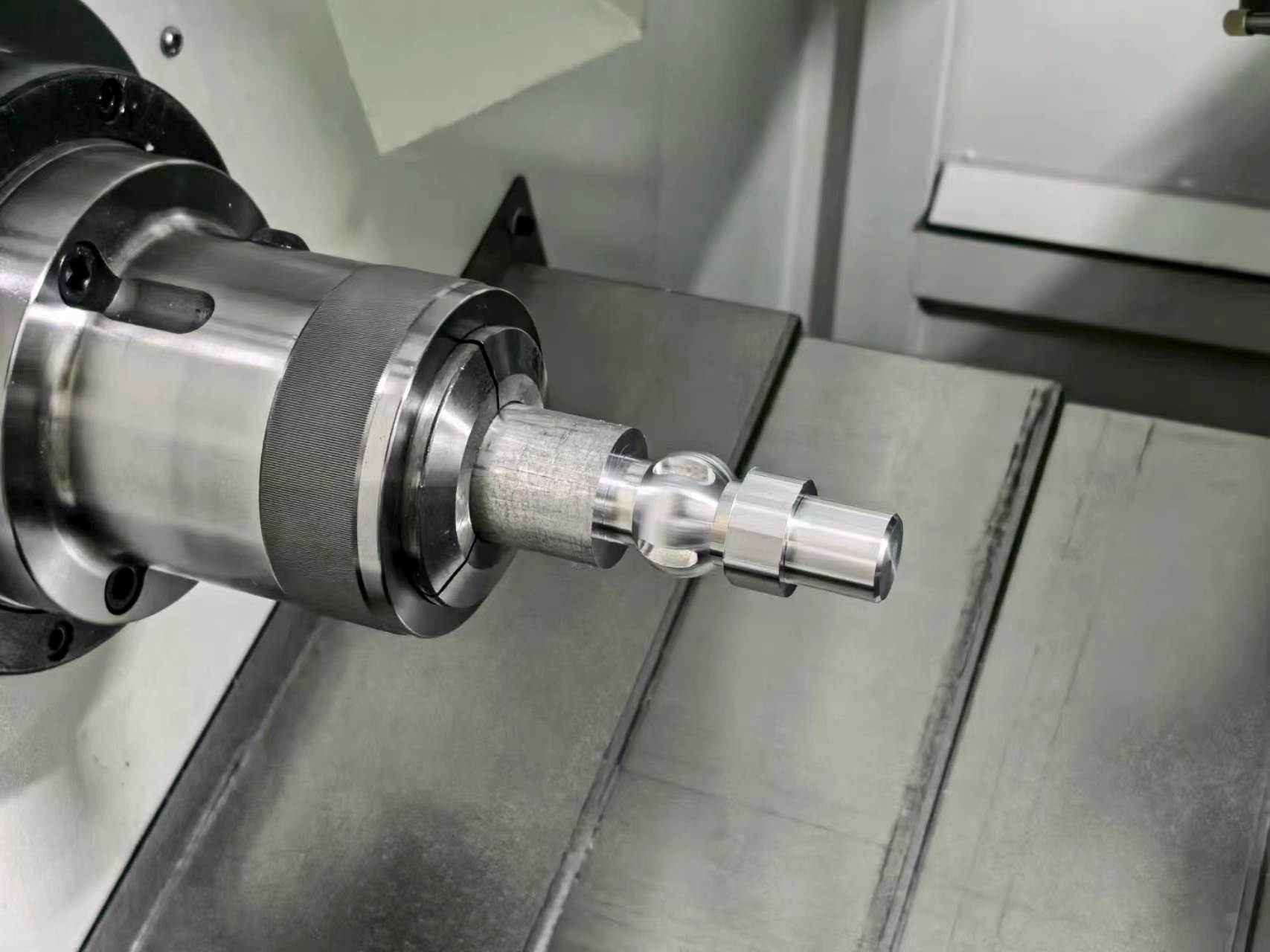
This is also where lathes and mills divide the work. A turned part with cross-drilled holes and milled flats is the classic case for mill-turning CNC centers with Y-axis live tooling: one setup, one datum chain, no re-fixturing error, cycle time roughly halved. A Y-axis CNC lathe such as the KX-46J Y-AXIS (4+4 Tools) covers exactly this class of complex parts – its live-tool stations handle off-center drilling and cross milling while the C-axis indexes the workpiece, eliminating the second machine entirely.
How Should Machining Costs Be Evaluated Beyond the Purchase Price?
A CNC machining center for metal is a ten-year commitment, and total cost of ownership is the only honest math. Tooling consumption, spindle rebuild intervals, spare-part lead times, and CNC system support routinely swamp the price delta between a light machine and a well-built one. A two-percent scrap rate on precision aerospace parts erases any initial savings within months. Used machines can be bargains – if the ways, ballscrews, and spindle come with ballbar and laser-interferometer data; otherwise it is a lottery ticket.
The build standards worth demanding from any manufacturer are verifiable: casting aging records, scraping contact-point counts, spindle balancing certificates, and geometric accuracy re-checked by laser measurement before shipment. Manufacturers such as YASHU document these checks per machine – the inspection report, not the brochure, predicts the next decade of holding tolerance. The same discipline runs through the YASHU turning range – gang-tool lathes through Y-axis mill-turn models such as the KX-46J Y-AXIS (4+4 Tools) – for shops sizing a first machine for complex metal parts.
FAQs
1. What is the difference between a CNC lathe and a milling machine?
On a CNC lathe, the workpiece rotates against a stationary cutting tool – the natural choice for cylindrical metal parts. On a CNC mill or machining center, the tool rotates against a fixed workpiece to produce prismatic geometry. Mill-turning CNC centers combine both.
2. Is a 5-axis CNC mill always the best CNC machine for complex parts?
No. Parts needing indexed access only run fine with 3+2 positioning on a simpler machine. Simultaneous five-axis earns its cost on curved geometry – impellers, turbine hardware, implants – where tool orientation must follow the surface.
3. Can hard turning replace CNC grinding on hardened steel?
Often, for round parts in the 55-62 HRC range – Ra near 0.4 µm is achievable on a rigid, thermally stable lathe (verify per workpiece material and tooling). Grinding keeps the edge where form accuracy or burn sensitivity dominates.
4. Which machine tool features matter most for tight tolerances?
A stress-relieved, hand-scraped machine bed; a balanced spindle with low nose runout; thermal compensation; positive clamping of tools and workpieces. Backlash compensation improves positioning but cannot substitute for structural stiffness.
5. How does live tooling reduce machining costs on turned parts?
Drilling, tapping, and milling on the lathe in one setup removes the second operation, the re-fixturing error, and the queue between machines – typically halving lead time on cross-featured parts.