

The vmc machine price is not a single number. It is the sum of structural decisions, spindle specifications, axis configurations, and accuracy demands – each layer adding or subtracting five-figure increments from the final quote. The gap between a $28,000 entry-level VMC and a $180,000 production-grade platform comes down to choices made at the foundry, scraping table, and spindle housing.
What Key Factors Determine the CNC Machine Cost?
The exact cost depends on the type of CNC machine – and what comes off the table. A 3-axis VMC built for aluminum signage has nothing in common with a multi-axis CNC configured to chew through hardened D2 mold steel. Cost drivers:
- Structural foundation: HT300 Meehanite casting grade, way system (box way vs. roller linear guide), vibration stress relief
- Spindle system: rated power, torque at low rpm (where it matters for steel), max rpm, bearing type, through-spindle coolant
- Axis configuration: 3-axis, 4-axis rotary table, 5-axis simultaneous – and the travel envelope
- Control system: controller tier, conversational programming, thermal compensation maps
- Accuracy class: positioning and repeatability tolerances, geometric accuracy, surface finish
- Tooling and auxiliary: magazine capacity, chip conveyor, high-pressure CTS (70 bar minimum), enclosure
A shop running 2,000 batches of automotive hubs needs a stiffer platform than one milling prototype brackets.

How Does Structural Configuration Affect CNC Machine Cost?
Structure is the single largest line item – 30 to 45 percent of cnc machine cost, often more. A bed cast from HT300 Meehanite cast iron, seasoned through vibration stress relief, absorbs chatter energy that a welded steel frame or thin-wall casting cannot damp. That damping separates a production-grade VMC from a benchtop mill that looks similar on a spec sheet but scrapes parts the moment chip load increases.
Box-way construction – hand-scraped flat guideways carrying the saddle and table – outperforms roller linear guides the moment heavy cuts in steel enter the picture. The trade-off? Box ways sacrifice rapid traverse and run with higher friction. Roller linear guides win on acceleration. But under aggressive milling in hardened steel, linear guide carriages transmit vibration straight into the casting. Surface finish suffers. Most production mold shops know this. Most spec-sheet shoppers do not.
Thermal stability compounds the problem. A symmetric column, thermostatically controlled coolant, and spindle thermal displacement compensation add to the cost of cnc machining centers – but skip them, and the machine drifts 0.02 mm between morning and afternoon. Shops machining Inconel 718 or titanium learn this the expensive way: a rigid, thermally managed platform cuts scrap and idle machine time, lowering the cost per part. For workpieces that demand this structural damping and envelope capacity, the Heavy-Duty CNC Vertical Machining Center YS-850/850D pairs an HT300 cast base with hand-scraped box ways built for this tier.
How Do Spindle Power and Axis Configuration Influence the Final Price?
Spindle specification is where price climbs. A 7.5 kW spindle – fine for aluminum – cannot sustain the torque to face mill tool steel at 800 rpm without stalling. Step up to 11 kW, 15 kW, or beyond, and the bill grows: larger bearings, beefier drive motors, tighter runout specs. Through-spindle coolant at 70 bar or higher is not a luxury – it is the difference between a tool that lasts 40 minutes and one that lasts 4 hours. Buyers who overlook this find out fast.
Axis configuration hits even harder. Adding a 4th-axis rotary table turns a 3-axis VMC into a positioning-capable platform for multi-face work; a 5-axis trunnion enables simultaneous contouring. Each rotary axis adds its own servo motor, brake, harmonic drive, and geometric accuracy verification – none cheap. For workpieces that demand extended Y-axis travel (mold bases, automotive fixtures), the CNC Vertical Machining Center YS-1090/1090D stretches the envelope without softening the column. As YASHU machining centers demonstrate, matching spindle and axis specification to the workpiece spectrum controls the final price.
How Does Precision Grade Drive the Cost of CNC Machining?
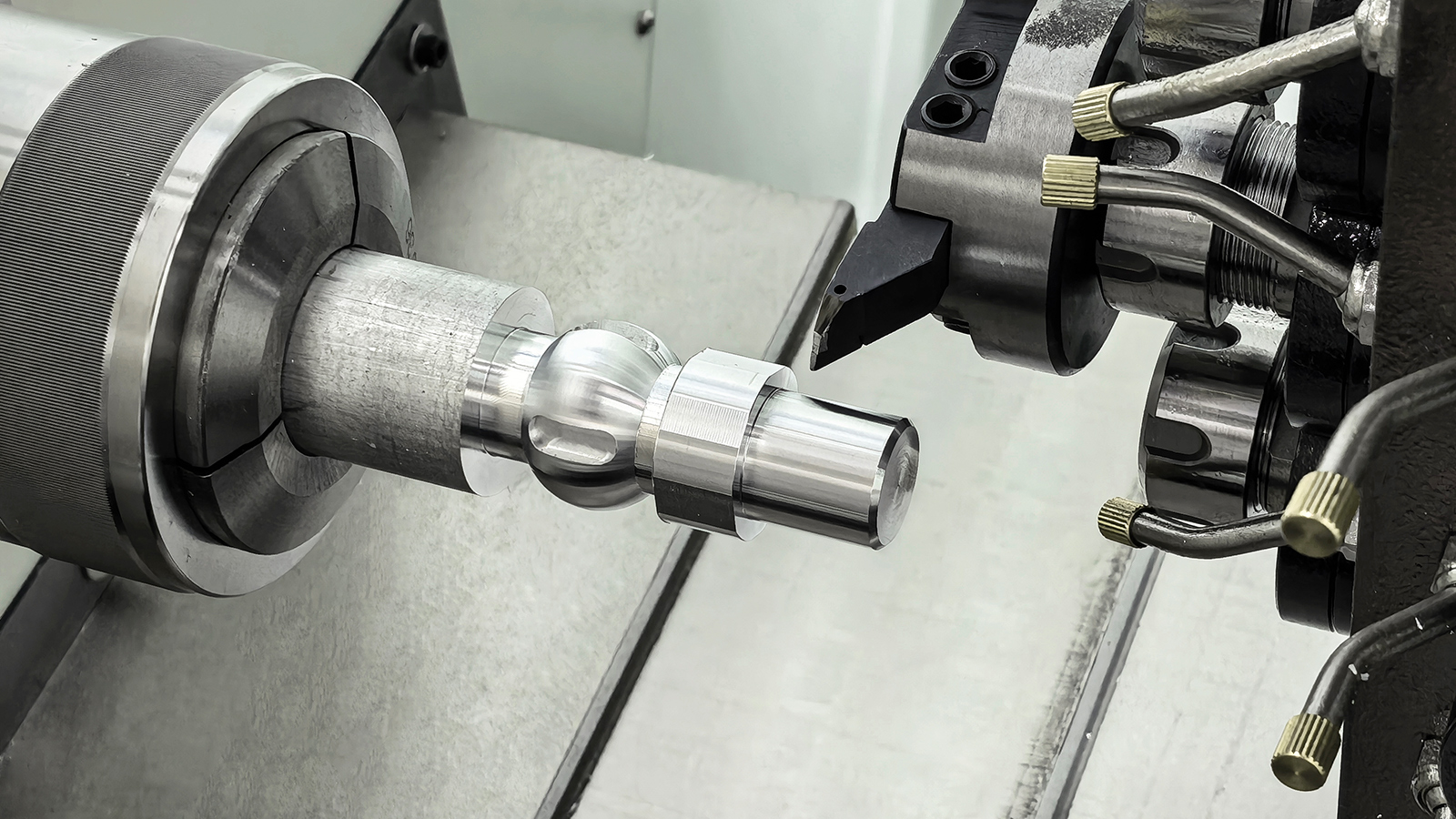
Precision is expensive, and not linear – exponential past a threshold. When a workpiece demands positional accuracy of 5 micrometers or better, with repeatability under 3 micrometers, the machine must hold strict dimensional stability through every thermal cycle and tool change. Achieving that takes hand-scraped geometric alignment, laser-compensated ball screw mapping, and thermally symmetric structural design. None of it is cheap. All of it is necessary.
The accuracy class of a machining center is quantified – not advertised – through standardized testing. Positioning accuracy and repeatability are evaluated per ISO 10791-4, the machining-center standard defining measurement procedures and tolerance grades. A buyer who asks for the acceptance report can tell within minutes whether a quoted VMC earns its price tag. Rotary axis geometric accuracy – critical with a 4th or 5th axis – falls under ISO 230-7, defining test methods for spindle noses, rotary tables, and swivel heads. Machines passing at tighter tolerance bands command a premium. Reason: every component must be held to a narrower machining allowance during assembly.
Surface finish follows the same curve. A VMC that holds Ra 0.4 or finer needs superior spindle runout control, balanced tool holders, and vibration-free way systems. For medical and aerospace manufacturers, outsourcing to specialized cnc machining services often costs more per unit over time. The machinability rating – classified per ISO 513 into P/M/K/N/S/H groups – determines whether a standard setup suffices or a heavier configuration is non-negotiable for S-group alloys (nickel-based superalloys, titanium).
Cost Breakdown: How to Estimate CNC Machining Costs and Reduce the Overall Cost?
Total cost of ownership separates purchase price from recurring burden – and most shops underestimate the latter by 30 percent. A cost calculator inputs production volume, material cost, tooling cost, labor cost, and machine time to give procurement a defensible forecast. Key factors: type of cnc machine, expected machine hours, hourly rate, and cutting tool inventory the workpiece mix will burn through.
Strategies for Cost-Effective Machining
Several strategies keep costs manageable without sacrificing precision:
- Match the machine to the workpiece. Overspecifying a 5-axis trunnion VMC for prismatic parts inflates fixed cost; under-specifying rigidity for hardened steel drives up tooling cost and scrap. Both are common. Both are expensive.
- Optimize tool life. The correct end mill or cutting tool, dialed in at the right cutting speed and feed rate, extends tool life and kills idle machine time. This is basic. Many shops still get it wrong.
- Standardize fixturing. A well-engineered setup slashes machine setup time – the largest contributor to higher per-unit costs in low-volume work.
- Buy total cost of ownership, not sticker price. A higher-priced machine from a reputable cnc machine manufacturer such as YASHU – with reliable spare parts and proven accuracy retention – often costs less per unit over five years than a cheaper machine that drifts out of tolerance and scraps parts.
For prototype and low-volume runs, professional cnc machining services bridge the gap until production volume justifies an in-house platform. Below roughly 1,500 machine hours per year, outsourcing wins; above that, ownership pays.
FAQs
How much do CNC machines cost, and what is a realistic vmc machine price range?
A 3-axis VMC runs $25,000 (entry-level, linear guide, aluminum-friendly) to $80,000 (production-grade, box-way, steel-capable). Mid-range 4-axis VMCs sit at $60,000 to $150,000. True 5-axis machining centers span $120,000 to $300,000-plus. The exact cost depends on spindle power, travel, and accuracy class – not the brand badge.
What is the cost per part difference between a 3-axis and a 5-axis VMC?
5-axis platforms carry higher depreciation per machine hour, but the cost per part can drop for complex geometries: single-setup completion eliminates refixturing error and collapses setup time. For prismatic parts, 5-axis is wasted capacity – and wasted capacity has a cost.
Does a higher machine cost guarantee better surface finish?
No. Surface finish depends on spindle runout, tool balance, way damping, and cutting strategy – not the price tag. A well-tuned mid-range box-way VMC can outperform a higher-priced linear-guide machine in steel, provided the operator optimizes cutting speed and tool selection for the material.
How do material costs factor into the cost of cnc machining?
Material cost is foundational, but the cost depends on the type of cnc machine: machining hardened tool steel demands more rigidity and burns more tooling cost than aluminum – affecting machine selection and per-unit cost.
When does outsourcing to cnc machining services make more sense than buying a VMC?
When annual machine hours fall below break-even – typically 1,500 to 2,000 hours per year for a mid-range VMC – fixed cost exceeds the hourly rate of outsourcing. Above that, in-house production delivers lower unit costs and tighter quality control. The threshold is not a secret. It is arithmetic.
References
- International Organization for Standardization. (2012). Classification and application of hard cutting materials for metal removal with defined cutting edges — Designation of the main groups and groups of application (ISO 513:2012, 4th ed.). https://www.iso.org/standard/59932.html — Defines P/M/K/N/S/H application groups for matching tooling to machinability; supports the claim that S- and H-group alloy machines command a pricing premium.